Wild animal death, funerals, and their human-animal bond influences have much to teach us about our relationships with nature.
Read more →
Wild animal death, funerals, and their human-animal bond influences have much to teach us about our relationships with nature.
Read more →
Whenever I feel overwhelmed by the plight of some animals, I turn to these words of animal wisdom for animal-lovers.
Read more →
This strange year demands as much well-aged holiday as cheer we can cram into it. Something more than just spiked eggnog or Irish coffee.
Read more →
Depending on how you look at it, the world of spay and neuter either may be floundering or fantastic. What do you think?
Read more →
How do you define natural non-human intelligence? I thought about this as I watched a PBS-Nova’s episode, the Secret Mind of Slime.
Read more →
The down- and upsides of COVID-19 for dogs get little media attention. This article addresses some of these and their effects on our dogs.
Read more →A friend’s comment about the political climate made revisiting my thoughts about fighting like cats and dogs a viable option at this time.
Read more →
If you saw an ad that proclaimed, “Free Endangered Gifts now available! Limited time offer! Get yours while supplies last!” what would you do?
Read more →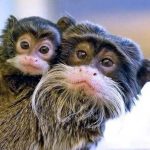
I’m republishing this Zoobiquity book review because I believe its message is more relevant than ever..
Read more →
Does the buzz phrase “responsible pet ownership” communicate a valuable message, or is it another marketing success but reality failure?
Read more →
Articles that mention the role of the human-animal bond in the COVID-19 era often present a highly limited human view of the animal’s function.
Read more →
When you think of One Human-Animal Health, are you a connector or a compartmentalizer? That depends on your view of the natural world.
Read more →
It always helps to have words of wisdom from past luminaries if we’re among those who call ourselves animal-lovers.
Read more →
A decade later, the ultimate human-companion animal bond resolution makes its appearance once again to celebrate New Year’s 2020 with our companion animals.
Read more →
Nothing exceeds the value of the gift of restorative sleep to our companion animals. It may seem like nothing to us, but to animals with health or behavioral problems it can mean a great deal.
Read more →
Still drowning in behavioral jargon, still starving for information: sounds like a good title for a country western song doesn’t it? Not quite, but close.
Read more →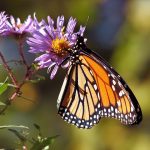
When I experienced my butterfly revelation, I learned yet again that nature’s light-bulb moments may come in very small packages.
Read more →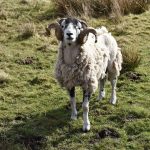
A celebration of the human-nature and human-animal bond at its best: How often do you experience this in your own life? James Rebanks routinely does.
Read more →
Today events on a par with 9/11 as well as devastating natural disasters worldwide assault us on a daily basis: How do these still troubled times effect the human-animal bond now?
Read more →
Self-initiating behaviors occur in both cats and dogs. Think of them as those behaviors these animals display on their own in a particular context without any apparent training from us or any other person. However, the effect these behaviors on humans may differ dramatically depending on whether a cat or a dog displays them.
Read more →
The subject of this month’s commentary – horses, dogs, learning, and motivation—began coming together in my mind years before it found its way into words.
Read more →
After revisiting the topic the human-canine bond and owner loss last month, I knew revisiting owner loss and the human-feline bond also had value.
Read more →
This month I revisit a topic I first wrote about in 2002: the Human-Canine Bond and Owner Loss. Why now? Because the increased lack of that knowledge about canine behavior and the bond makes it easier not to think about what will become of the dog if something happens to the owner. But is that the kind of legacy we want to leave for our dogs?
Read more →
Do you sabotage you pet’s behavior? Most of us do at one time or another. But if we do it often enough when our animals misbehave, soon we may perceive any related beliefs that fuel the sabotage as true.
Read more →
Does companion animal behavior influence the make-up of the animal’s microbiome? Or does the microbial makeup of the animal’s microbiome influence companion animal behavior? Or maybe some of both?
Read more →
After a hectic few months, it’s time for a January Break for the residents of the little house on the hill. Now to see if the pets agree…
Read more →
Do you consciously or subconsciously impose Ten Holiday Commandments on your pets during the holiday season? I used to–Until I discovered there’s a solution for this irrational human behavior.
Read more →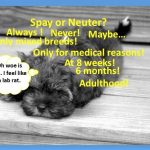
Although companion animal spay and neuter has ancient roots, its contemporary incarnation includes an intriguing mystery.
Read more →
Are you guilty of catastrophizing companion animal behavior? If so, it might be affecting your animal’s health and behavior.
Read more →
I never would have connected the human-animal bond with amblyopia until I had an experience that introduced me to this human orientation.
Read more →
I believe we’re in desperate need for a more mindful socialization strategy for rescue/transport dogs. Over the decades, I’ve learned a lot about canine behavior and the human-canine bond from my clients. This includes what works–as well as what doesn’t.
Read more →Last month I began a noble experiment on the grounds surrounding the little house on the hill to test the findings of a study done by the USDA and partners funded by the National Science Foundation. Specifically, I wanted to know how mowing affected bee welfare in my yard.
Read more →
Any change in nature can influence the quality of the human-companion animal bond. But at no time of year is this as obvious as it is in spring.
Read more →
For eleven weeks more than a decade ago one of my dogs, Frica, daily reminded me of the disconnect between animal learning and teaching theory vs. the way we teach animals and expect them to learn. She taught me a lot that I still use today.
Read more →
As often occurs in science, once scientists started looking for tool use in nonhuman animal species, they found members of multiple species throughout the animal kingdom exhibiting this behavior in nature. (See this Wikipedia article for a nice overview of this subject.) Historically, tool use was considered one of those skills that made humans superior. Then when evidence of it appeared in wild animals, some said those animals must have learned it from humans. But then evidence ruled that out too. Naturally, this got me thinking about tool use in dogs and cats and whether the lack of reports of this
Read more →
I doubt that Bamboo the cat cared a bit about evolutionary elegance and anthropomorphism when he created his new cabin fever game. But that didn’t stop me from making the connection…
Read more →
This month’s commentary explores the trend toward publicly proclaimed polarized thinking in our society and how this may influence our interactions with companion animals.
Read more →Happy New Year Everyone! These wishes come as the animals and I take some time off to recuperate from a very hectic end of 2018. At this time of the year in the northern hemisphere, Mother Nature is in slowdown mode and I decided that the pets and I should join her and all the plant and wildlife round the little house on the hill and do likewise. At least for for bit. Podcasts will resume in January and commentaries in a month later. Wishing you all a very happy and healthy 2019 filled with starlit nights and quality
Read more →
When faced with a dark, frigid post-holiday season, an energy-efficient summary of key points to remember when facing animal behavior problems can help a lot.
Read more →
Behave: The Biology of Humans at Our Best and Worst is a must-read for anyone who works with animals and people.
Read more →
Do you think or hear yourself saying, “I’m so stressed!” often? If so, this commentary is for you and your animals.
Read more →
In this era when human stress and cynicism seems the norm, don’t forget the role human and animal playfulness plays in animal well-being.
Read more →
In science, the term “elegance” refers to processes so energy-efficient one can’t help but marvel. Seems odd to apply that to predatory behavior, but so it is.
Read more →
Sometimes the awareness that something you dreaded has occurred brings relief. Other times, it really stinks.
Read more →
If you have a dog and your lifestyle during the week differs from that on the weekend, does that effect your relationship with your dog? Have your expectations of that relationship changed over the years?
Read more →
One of the first harbingers of spring many of us may miss is the dramatic increase in the scent load. But not our dogs and cats..
Read more →
When it comes to resolving the stray dog problem, the current rescue-transport system misses one critical point.
Read more →
Often things appear too good to be true are. The same is true of neurotransmitters and their role in behavior.
Read more →
This month I resurrected the first commentary I wrote on this website 15 years ago to compare the status of human-animal relationships then and now.
Read more →
As one year ends and another begins, all of us in the little house on the hill wish you and yours of all species lots of good memories and a holiday season filled with love and joy.
Read more →
When you think of a successful animal training method, what’s your goal? Obedience most of the time? Or obedience when it really counts?
Read more →
Social learning represents a viable teaching strategy in wild animals. But as usual. sometimes our close relationship with companion animals can complicate matters.
Read more →
Because I’m a more optimistic person by nature and the canine transport scene was getting me down, I decided to list the benefits I’ve gained since this process began.
Read more →
This month’s commentary considers that growing population of those who use or seek dogs that they train themselves to enhance their own or a loved one’s physical or mental health.
Read more →
This commentary considers the challenges and responsibilities facing those who prescribe assistance or support dogs for people with a growing array of conditions.
Read more →
When those interested in animal health began talking about taking a more holistic approach, initially I was quite excited. I felt this way because I expected their approach to be, well, holistic. But…
Read more →
Suppose I told you that a disease so contagious existed that it could spread with remarkable speed from one person or animal to a thousand or more in a matter of minutes. Some humans can transmit it to some animals and some animals can transmit it to some people Even more frightening, this neuro-pathogen typically enters through the eye and disrupts retinal cells to gain access to the most ancient part of brain. Once there, it disrupts the autonomic nervous system which controls all those vital functions necessary for life. Symptoms associated with the disease include increased sweating or
Read more →
As our pets’ lives have become more high-tech, does this shift indicate a more intimate or a more remote relationship with them?
Read more →
With each passing decade, the respect with which US society views service dogs and their handlers sadly steadily declines. This poses increased problems for these animals and their handlers and those around them.
Read more →
Waterboarding: a torture technique whereby individuals are treated in a manner that makes them believe they are going to drown. Surely, you may be thinking, this is not a suitable subject for the post-holiday season! Emotionally, I agree. On the other hand, you may be as surprised as I was to discover how many behavioral/training concepts directly or indirectly relate to water. This connection popped into my mind because two of these tend to raise their heads during the pre-holiday season and often linger into January, fueled by a human desire for quick results when animals have problems. First
Read more →Endangered Holiday Gifts No, this isn’t a commentary about gifts made from the hides or other body parts of endangered animals, or decorations, culinary delicacies, or cure-alls made from endangered plants. It’s about giving yourself and your loved ones of all species two gifts—or maybe just a taste of two gifts—far more endangered than that. Can you guess what they are? Some additional clues: December through mid-January people worldwide from diverse backgrounds will celebrate multiple holidays. As we have become a more global community traditions from one religion or group of people become incorporated into others to the enrichment
Read more →
We may tell ourselves that technology enables us to ignore our internal clocks and those of our diurnal animal companions. But as the cost of doing so mounts up, could becoming more in sync with those clocks be the better option?
Read more →
This month I want to explore the ethology of the human-animal bond. In my pre-ethology days, I’m the first to admit that my views of the bond were shaped more by the media than science…
Read more →
As often happens, I stumbled upon material I wrote almost a decade ago while looking for something else. When I stumbled on this, couldn’t help noticing how little has changed. One welcomes exception is that increasing numbers trainers and behavioral consultants recognize the difference between the animal behavior as traditionally perceived by psychologists that dominates training, and that perceived by those in the biological sciences. Although Konrad Lorenz suggested the word ethology to reflect the study of the animals within their normal environments more than a half century ago, it didn’t enter the mainstream training/behavioral lexicon until relatively recently.
Read more →
I saved cats for last in this series on instinctive drift in companion animals because they occupy a unique niche in the domesticated species line-up. That unique niche, in turn, owes its existence to behaviors that make cats anything but little dogs or fur-covered humanoids. Add that they’re the most recent addition to the self-domesticated/domesticated population and it’s no surprise that cats may drift more readily toward their deeply entrenched behaviors, some or many of which may confound any humans, canines, or members of other domestic species with whom the cats interact.
Read more →One unintended consequence of the mass transportation of unwanted dogs nationally and internationally is that people like me with an interest in animal health and behavior may now encounter problems seldom if ever previously seen.
Read more →
In retrospect I can appreciate how becoming proficient in animal behavior, like most animal-related professions, consists of a process that in some ways mimics the co-evolution of humans and other domestic animals. First you understand the normal behaviors of the animals around you at the same time as you acknowledge that those animals also are trying to make sense of human behavior. At some point in this process, you also realize that it would help enormously if you understood your own normal and problem behaviors too.
Read more →
It’s that time of year here in the northern hemisphere when hormone levels shift and thoughts turn to mating, reproduction, and raising young. Some of us find ourselves getting all gooey when we see photos or videos of baby animals; the urge to add a companion animal to the household may increase. Then one day we find ourselves trolling the Internet and scrolling through pages of photos on purebred, shelter, or rescue sites looking for THE ONE… Back by popular request is the list of questions that kindhearted and well-intentioned but ill-prepared folks have told me over the years that they
Read more →
No sooner did I finish Never Have Your Dog Stuffed, a memoir written by Alan Alda, than I began thinking about how experiences with companion animals may carry over into other parts of our lives. For young, only child Alda, a black cocker spaniel made the isolation, boredom and pain of polio bearable. When the dog died unexpectedly, he became so distraught that his father took the body to a taxidermist in hopes of lessening the loss. I won’t give away what happened except to say that the result was not what they expected, much worse than Ollie’s camera-phobic expression in
Read more →
It’s late February as I write this and I’m having a major attack of cabin fever. It began this morning when I turned on my computer, saw the screen saver I loaded the beginning of November and hated it, really hated it. Superficially it doesn’t look inflammatory. It’s merely a view of my front yard in winter. What’s so bad about that?
Read more →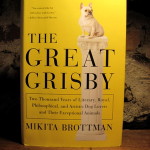
This month’s commentary is a review of The Great Grisby: Two Thousand Years of Literary, Royal, Philosophical, and Artistic Dog Lovers and Their Exceptional Animals by Mikita Brottman.
Read more →
January is the Resolutions Month. At the same time the post-holiday period often doesn’t lend itself to starting big projects. Even so, the transition from holiday to daily routine does provide a good opportunity time to evaluate our interactions with our animals for any trouble spots.
Read more →It’s that time of year again when our nonhuman members of the household often serve as a good reminder of what’s really important during the holiday season…
Read more →Last month’s commentary considered working versus working and working cats. Now it’s time to ponder the multiple forms working dogs also may take.
Read more →What distinguishes a working cat? It turns out that it depends on what kind of work the cat does.
Read more →Even the most pro-animal people often will admit that they like certain animal species more than others. Trash Animals explores why we feel the way we do and how this affects human and animal health and behavior.
Read more →Unlike novels involving human-canine relationships that provide intimate, often gut-wrenching details associated with traumatic events to justify a character’s response Ellen Cooney’s beautifully crafted book, The Mountaintop School for Dogs, asks us to forego that familiar literary tactic in favor of something far more intimate and in some ways unnerving.
Read more →Although canine aggression gets the lion’s share of media attention, when it when it comes to possessing the potential to destroy or prevent the development of a mutually rewarding human-animal bond, separation anxiety shares top billing on my list.
Read more →Most people value activities that they share with their dogs. The trick is to not let the desire to do this take precedence over the welfare of the animal.
Read more →This commentary belongs in what I mentally think of as my “Field of Dreams” file. These topics arise from discussions with those who work with companion animals and almost inevitably include a recurrent theme: The old approaches have reached a point of diminishing returns because the needs and expectations of the animal and human populations have changed.
Read more →While according to some the ability to use language elevates the human species, when it comes to labeling animal behaviors it often creates confusion instead of clarity.
Read more →This commentary presents a list of questions for those considering rescuing an animal, based on comments made by self-defined rescuers who later regretted that they didn’t get this information before they got caught up in the rescue culture and process.
Read more →For several reasons the idea of using certain medical problems in the domestic, primarily companion, dog as a model for similar problems in humans is generating interest among some researchers.
Read more →Because plants play such a critical role in the animal environment, it shouldn’t surprise us when some of the same rules apply to both. But sometimes it does.
Read more →Over the years I’ve written numerous holiday-related articles, commentaries, and blogs on all the different issues that may make holidays less than merry for companion animals and the humans with whom they share their lives. Nor do I doubt that countless others will contribute their own offerings that address these same topics again this year. Among these will be warnings not to give animals as holiday gifts, even if we feel totally convinced that the animal would result in the very best holiday ever for the recipient. We will learn, if we didn’t already know, the numerous reasons for
Read more →Regardless who originally said or wrote that “Sometimes a cigar is just a cigar” in what context, in its most popular current usage it refers to not overlooking something’s actual identity in favor of any symbolism we choose to attach to it. As the amount and different kinds of symbolism we confer on companion animals continues to grow, the concept of “just an animal” seems to be going the way of “normal” in our society. By that I mean that in our efforts to impose all our symbolism (to say nothing of various behavioral, medical, and political labels) on
Read more →Although records of numerous food-related human-animal dilemmas now fill my files, four situations that occurred relatively early in my veterinary medical career remain fixed in my mind because of what they taught me about the connection between food and human and animal emotions. The first involved an overweight dachshund with pancreatic problems that responded well to medical and dietary changes. Even so, periodically the dog would experience sudden bouts of incapacitating pain. And always the cause was the same. Even knowing how it would affect her cherished pet, the owner would succumbed to the dog’s pleading looks and perfect
Read more →What do poet Gertrude Stein and our interpretation of the bond have in common? In perhaps her most memorable line she wrote, “A rose is a rose is a rose,” a deceptively simple statement that has fueled academic discussions for decades. But according to Stein herself, the line referred to the fact that merely thinking or hearing a word suffices to elicit any imagery or emotions we associate with it. In other words and in spite of all those dictionaries out there, we choose to take a Humpty Dumpty approach: “When I use a word,” Humpty Dumpty said in
Read more →When you think animals worthy of rights protection, which groups of animals come to mind? For most of us, the list would include farm and laboratory animals, animals used for one form of entertainment or another, members of threatened or endangered species. Which group of animals do you think earns the least of society’s concern about animal rights? I’ll give you a hint: the answer probably will surprise you until you actually think about it. Did you answer companion animals? Or did you automatically dismiss this group as a possibility because of the magnitude of the investment so many
Read more →For years I’ve urged clients to always set themselves and their animals up to succeed so that every foray into new improved behavior ends on a high note. I made this recommendation based on ethological studies of a phenomenon called the Confidence Effect which can be summed up in the familiar refrain, “Winners keep winning and losers keep losing”. Admittedly few if any events ever carry a guarantee. But the concept did support the role consistency plays in establishing new behavioral pathways in the brain. And even better than the results of controlled studies, feedback from those applying the concept under
Read more →Authors Barbara Natterson-Horwitz, MD and Kathryn Bowers open their book, Zoobiquity: The Astonishing Connection Between Human and Animal Health with an incident that will be familiar to many dog and cat folks. When faced with a kitten-sized emperor tamarin monkey, Dr. Horowitz immediately related to the animal as she would to a human infant by establishing eye contact and doing the baby talk routine. However what happened next may strike some of you as bizarre and even mean. The veterinarian caring for the animal asked the physician to stop lest she throw the little creature into capture myopathy and possibly kill
Read more →Sometimes after successfully implementing the changes that eliminate their animals’ problem behaviors, my clients comment that doing so ranked among the most difficult but most fulfilling work they’ve ever done. And no doubt their animals felt the same way. One possible reason why mental changes may strike us that way takes us back to that bane and blessing of reality: our perceptions. We live in a society that equates hard work with hard physical labor such as splitting and stacking wood, hiking, pumping iron, or doing anything that gets us hot and sweaty. Within this realm, making mental changes in ourselves
Read more →In an interesting about face, researchers increasingly turn their attention to the placebo effect. Nor do they approach the subject as science-based myth-busters seeking to prove such responses reside all in the patient’s head. Or rather, they do hope to prove this by proving that placebos can and do cause beneficial changes in the brain and, by extension, in the body. The difference now is that instead of associating those brain changes with easily duped feeble minds, they see these effects as a way to decrease and in some cases eliminate the need for more physiologically and financially costly
Read more →What do you think of when you hear or read the words, “human-animal bond”? For many people, images of animals involved in some sort of animal-assisted therapy that improves a disabled person’s quality of life immediately come to mind. Others think of coping with the pain of pet loss, or heroic tales of animals rescuing their owners from burning homes, or search and rescue or military animals performing amazing feats within and beyond the call of duty. While all of these activities most certainly fall into the realm of the human-animal bond, they also may create the illusion that
Read more →Were you ever stuck at home because of lousy weather or an illness or injury grounded you and left you feeling utterly bored and useless? You didn’t want to watch yet another movie or play another video game; you had no desire to read another book, even one by your favorite author. You wanted to feel capable, not entertained. Fortunately help is now available for those of all ages who almost certainly will encounter this dilemma as least once in their lifetimes. Moreover it comes from a most usual source, i.e. the reduction in government funding for research on
Read more →Throughout December I gave a lot of thought to what I wanted to write about in the first commentary of 2013. Ultimately I decided to resurrect a commentary I wrote back in 2008. And, no, I didn’t do this because I succumbed to a holiday-cheer induced writer’s block. Or because I was too lazy to come up with something completely new. In reality I didn’t even remember this particular commentary until after I’d pondered the concept of resolutions—and specifically those related to issues involving animal health, behavior, and the bond—as I am wont to do this time of year.
Read more →


Human-Companion Animal Loss in the COVID Era
This is the third time, I’ve addressed the subject of human loss and the companion animal bond in my commentaries. How did this happen?
Read more →