Are sensory perceptions normally separated. Or are sensory perceptions normally a collective response?
Read more →
Are sensory perceptions normally separated. Or are sensory perceptions normally a collective response?
Read more →
I’ts not often that the words “giant rats”and “heros” appear in the same sentence, but here’s another case where they hopefully will.
Read more →
Just because we want our relationships with our dogs to be all-positive doesn’t guarantee that they will be.
Read more →
Sometimes people who include people-hating as a prerequisite for true animal-lover status can’t understand why I don’t share their beliefs. This podcast describes the benefits of a more comprehensive view.
Read more →
Studies that explore adults’ ability to recognize stressed canine body language in child-dog interactions have much to teach us.
Read more →
When is the last time your dog or cat made you laugh? When is the last time you made your dog or cat laugh?
Read more →
When it comes to your parental strategy toward your pets, are you a carpenter or a gardener?
Read more →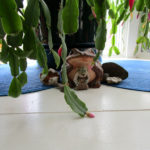
This podcast tells the story of a fern, a holiday cactus that isn’t really a cactus, and an eclectic collection elevated to sacred status during this magical holiday season.
Read more →
Does your pet have behavioral problems? If so, acceptance and damage control may be the most realistic holiday option.
Read more →
Would you like to see large mammals reintroduced in North America? What about near where you live?
Read more →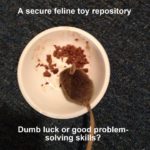
Do you think animals are capable of solving problems? Or are their solutions merely the result of dumb luck?
Read more →
We’ve all heard of busy little bees. This week’s podcast explores their emotional lives.
Read more →
This week I discover that a problem with animal research data that I thought had been resolved decades ago wasn’t.
Read more →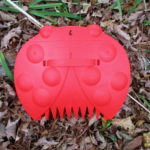
What does my rare fanged ladybug leaf-grabber have to do with migration and other normal human and nonhuman behaviors that occur during the autumn transition? More than you might think…
Read more →When faced with animal medical emergencies, it’s easy to ignore the animal’s mental and emotional well-being. But is that a wise or caring thing to do?
Read more →
How many true doggy friends does your dog have? How many doggy acquaintances? What about you?
Read more →
What’s new in human-canine farming? Tune in to discover 3 ways dogs help farmers in new ways.
Read more →
Before you listen to this podcast, make a list of your top 7 animal species and bottom six. Then discover which ones others chose.
Read more →
Do genetics and environment create bullies and their victims? Or are other factors at work too?
Read more →
A podcast about butterflies and bacteria that may or may not cause you to think about Amazons as it did me.
Read more →
This week I describe what happened when I left my exam room at the clinic and found myself in the Twilight Zone.
Read more →
If we accept that animals make decisions, then the question becomes whether they make them the same way we do. What do you think?
Read more →
What do whale earwax and political conventions share in common? The ear wax provides more reliable information.
Read more →
Antibiotic resistance plagues human and veterinary medicine for the same human reasons. That’s why some attempts to shift the blame to the animals surprise me.
Read more →
This podcast explores some new insights into the highly complex world of feline appetite and food preference. If ever there was a subject that proved the old saying, “The more you know, the more you need to know, this is it.
Read more →
The podcaster is taking a few weeks off to stack wood and do some long overdue garden chores.
Read more →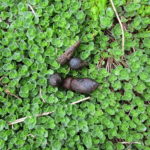
No matter how far some folks may carry political correctness, I doubt that society would support a movement–if you’ll pardon the pun–to elevate fecal matter.
Read more →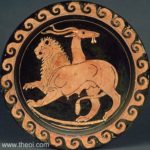
A chimera (pictured here) is a mythical creature composed of parts from different animals. Does it represent our ancient ancestors’ first forays into fantasies about genetic tinkering with animals for real?
Read more →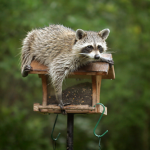
Will the raccoons admirable survival skills enable them to survive in suburbia? What once seemed like a done deal may not be one.
Read more →
Do you think some ancient legends might contain at least a grain of truth? Could some of those grains apply to animals too?
Read more →
This week’s podcast features some of the results of the massive 2014 purebred dog breed-health survey conducted in the United Kingdom that includes some surprises.
Read more →
Previous studies reported the negative effects of secondhand smoke for dogs. The outlook is even bleaker to cats.
Read more →
Managing rather than dealing with behavioral problems is a common strategy. But then it comes to biting dogs, it might not be a wise one.
Read more →
This week’s podcast explores how Mother Nature knew the value of the little black dress concept long before humans did.
Read more →
The problem-oriented statistics-driven battle against canine testicles moves into the chemical realm. Will it be more successful?
Read more →
What happens when we replace a pet’s dearly beloved toy without thinking through the process first? Tune in to find out.
Read more →
Not surprisingly, the evolution of the human-domestic cat bond didn’t follow a predictable course either.
Read more →
Multiple dog breeds carry strong emotional charges. Could this affect their performance as viable emotional support animals?
Read more →What do forest fires, human disease, and our use of antibiotics have in common? All of them behave in accord with natural laws. Unfortunately flouting them to treat current problems as quickly as possible may set up future generations for those far worse.
Read more →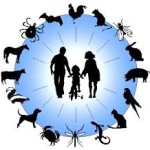
What does unfolding Zika virus story have in common with hit movie sequels? To find out, tune into this week’s podcast.
Read more →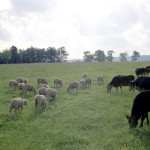
Here’s the news item in Nature World News that triggered this podcast. As we all know, I love my dogs and cats. But there’s something about cows and sheep that makes those animals really special too. I know for a fact that both are exceptional audiences for even the worst human vocal concerts. Nor can I imagine making it through my 3rd trimester of pregnancy and my last semester of vet school simultaneously without the comfort of some very special dairy cows.
Read more →
Given how often the word “fairness” comes up and the simplicity of its definition it should be the goal of any human- or nonhuman relationship. But it’s not that simple.
Read more →
Anyone who follows the purebred animal scene knows that their increased number of mutations doesn’t bode well for the physical and mental health of certain breeds. However, this process isn’t a human invention.
Read more →
For those seeking proof of the statement, “The more we know, the more we need to know,” the subject of canine domestication provides its share.
Read more →
This week’s podcast uses the hormone oxytocin to demonstrate the effect on public perception and expectations when research is given an strong positive emotional spin.
Read more →
A recurrent theme in history is “Who will watch the watchers?” Nor does science escape such scrutiny as the these studies remind us.
Read more →As we approach the second week of our podcasting break, the quadrupedal muses and I begin our celebration of the New Year at the little house on the hill by sending you all good wishes for a happy and fulfilling New Year. Ollie also wanted me to remind you to party responsibly like he does.
Read more →
The podcast is taking some time off this holiday season to enjoy family, friends, and a little quiet time too.
Read more →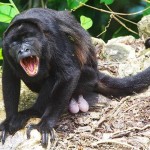
One certainty about behavior and all science is its uncertainty, and howler monkeys certainly make a good case for this.
Read more →
As with fundamentalism in other areas, reports of fundamentalism related to animals tends to overshadow the work of the good people working to address the difficult human issues that more often than not underlie those animal issues. They are the true heroes and I for one am grateful for their presence.
Read more →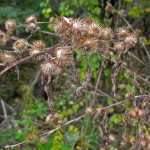
Most people are familiar with the lessons we can learn from little mustard seeds or acorns. But as Frica taught me, the oft-maligned burr can be a pretty good human and canine teacher too.
Read more →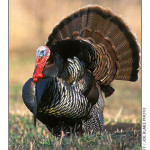
This podcast coincides with the Thanksgiving holiday in the US, but it explores a concept–being thankful for failures–that deserves attention regardless of the time of year.
Read more →
What do heart transplants, African elephants, and white and black elephants have in common? Tune in to this podcast to find out.
Read more →
To me, serendipity isn’t so much luck as that magical moment when all kinds of things you knew but never connected until they all suddenly fall into place.
Read more →
If you’ve ever taken a bioethics course you quickly realize that the concept of drawing lines frequently recurs. Relative to animal rights, we may cheer heartily at scientific studies that support those species dwelling on the side of the line with those we believe capable of higher thought processes. But when studies attribute those same qualities to those outside that group, life gets more complicated…
Read more →
This is a picture of Tilda, one of the subjects of this week’s podcast which also includes a link to a video of her displaying her human language skills.
Read more →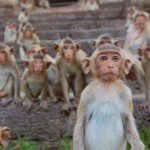
Often we divide animals into social and solitary species for convenience. But the more researchers study animals in their natural habitats, the more they realize that their organizational structures aren’t that simple. Differences can and do occur.
Read more →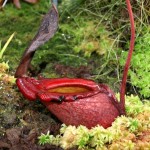
Probably most people are familiar with the old saying, “Getting there is half the fun.” or one of its many variations. It turns out that is is nature’s normal game plan. All living beings are works constantly in progress. Do you find this notion disquieting, or exciting like I do? When I see a transition organism like the magnificent and complex sorta plant sorta animal Napenthes rajah, I can’t help thinking about how it came to be what it is today.
Read more →
This podcast is a first for me in that it will be uploaded a mere week after I recorded and edited it. Normally my anal personality ensures there are at least 2 and as many as 5 podcasts lined up and waiting to be broadcast. But recently the natural world conspired to remind me in multiple ways that it, naturally, prefers a natural approach. For many reasons I agree wholeheartedly with this. But damn, sometimes it can be a real nuisance too.
Read more →
For many people who share their lives with dogs, getting their canine companion to respond to the come command is anything but a zen-like. But the much less energy-intense process good canine parental figures use, teaches youngsters to come as well as a lot more.
Read more →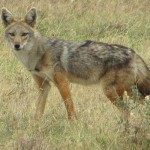
The example used in week’s podcast is either an African golden jackal, a subspecies of grey wold that’s separate from the Eurasian jackal, or a new wolf species depending on which system of species identification you prefer. It also points out how Nature can foil our attempts to put labels on living being and expect them to last forever. Learn more here about the maybe/maybe not new canine.
Read more →
This is the kind of picture that it would be easy to make up a story about, isn’t it? Perhaps you might imagine that the dogs collected these balls from all over the neighborhood. Or…
Read more →
This podcast was inspired by an article entitled From “one medicine” to “one health” and systemic approaches to health and well-being posted in a One Health Group on Linked In. I looked at a lot of silo pictures seeking one that illustrated the limits of silo thinking as it relates to the multiple interconnections that characterize the natural world. Finding none that did this, I opted to create one of my own.
Read more →
This week’s podcast considers the significance of the increased numbers of pet-related electronic devices on the market. In addition to those that shock, blast with irritating scents, or toss food at pets, there are those that allow obsessive folks to monitor everything their pets in order to…what? I’m not sure. No, I’m not opposed to technology. Those who followed the BeeBee Chronicles may recall that I didn’t hesitate to get my brain-damaged, deaf, and significantly visually impaired corgi a vibrating collar that also lit up so I could communicate with and keep track of her outside. (You can barely
Read more →For those of you unfamiliar with bond jargon, the first acronym in the title of this podcast is the reverse of the more familiar second, which stands for human-animal interactions. The physiological effects animals have on humans is of much less concern for many than the effects of humans on animals.
Read more →
One of the consequences of training methods that don’t take into account what and how dogs learn is that they may lose skills we never realized they had. An example of such a display is the “Pay attention to what I’m paying attention to” mimicking display, the subject of this podcast.
Read more →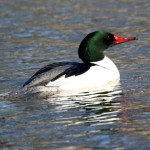
What do fairy wrens and mergansers have in common? In two quite different ways, each may provide insights into animal and human communication.
Read more →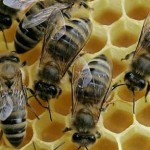
When I was editing this podcast, I was struck by how often we impose similarly unrealistic want-lists on companion animals too. In both cases, we want an animal who fills our definition of what is all-positive for us. We want the animals to be tough enough to handle all the environmental and other assaults we throw at them at the same time as we want them to be compliant and friendly regardless how unreasonable our demands. That there are now people working on robotic animals of one sort or another–including pollen-collecting drones–suggests that more people are realizing our demands
Read more →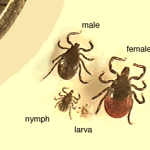
The great majority of the animals labeled as vectors as well as any potentially pathogenic micro-organisms they carry superficially may appear vulnerable to our technology. But it would be foolish to assume that the combination of their shorter life cycles and much (!) longer residence on the planet than ours hasn’t given them survival skills beyond our wildest dreams.
Read more →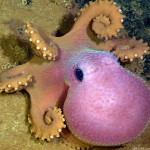
This week’s podcast considers the topic of parental sacrifice, specifically that of the stunning and devoted Graneledone boreopacifica, an octopus whose parental behavior would put most humans to shame.
Read more →
Another concept that often arises in the animal intelligence debate is the role of instinct. Unfortunately and like a lot related to animal behavior, there’s little agreement regarding what the term means and whether all animals or only all non-human animals display instinctive behaviors. Consequently I’ve adopted a basic rule that’s simplified my life greatly…
Read more →
This week’s podcast discusses two subjects that increasingly capture the interest of scientists: self-medication in animals and parasites. I suspect that some people would consider it a tragedy that these natural medications only eliminate the majority of the parasites.
But is this necessarily true?
Read more →
Now that researchers no longer risk their careers by studying once taboo subjects like animal intelligence, the amount of literature on the subject increases daily. This even includes studies that challenge the notion that our bigger brains make us smarter.
Read more →
This podcast could provide fodder for those who believe that I lead a pathetically sheltered life. But reading about how some viruses play such an integral role in our survival and most likely that of all living beings triggered quite a natural light bulb moment for me. It probably always would have. But it hit me particularly hard because it increasingly it seems like “virus” is perceived as synonymous with “pathogen” or even “big terrible pathogen that must be destroyed asap at any cost or at least vaccinated against”.
Read more →
The computer where I edit my podcasts is on a desk beneath two windows with a view of the area in front of the house. As I looked out the windows I realized that a variation on the theme of reverse gentrification described in this podcast also occurs in more rural settings too.
Read more →
Anyone who’s watched a catnip-sensitive cat respond to the plant knows that at least some animals are capable of hallucinating given the right trigger. However additionally this podcast explores some adverse or unexpected behavioral changes in response to medication. What goes through these animals’ minds? Do they feel as out of touch with reality as they appear? But how can we begin to know what the experienced when our grasp of their normal realities is so minimal?
Read more →
This week’s podcast considers some of the factors that may contribute to pets consuming potentially toxic human drugs. The overwhelming majority of these are accidental poisonings; the people involved love their animals and would never deliberately do anything to harm them. On the other hand sometimes illness, pain, or the side-effects of any medications may cause us to store medications in locations that, while convenient for us, may put our pets in harm’s way.
Read more →
So far any tracking of veterinary drug consumption pretty much has been limited to that consumed by food animals. However as veterinary medicine becomes more sophisticated and companion animals live longer, it’s not uncommon for animals to routinely be taking more than one medication. Add that many people have more than one animal and sometimes animals of different species, and the potential for mix-ups increases. This podcast considers some simple things you can do to make sure that this doesn’t happen to you and your pet.
Read more →
For those who listen to this podcast and think, “Well naturally she can do that, she’s a vet!” that’s not true. I know multiple people who are not veterinarians who would have done exactly the same thing I did and possibly even better. The thing is that this sort of zen like state takes over and you do what you have to do. And thanks to the physiology of the bond at least some of that same zen-like state gets communicated to the animal. In my particular case, a little more zen on my part would have helped both
Read more →
It’s still difficult for me to comprehend that there was a time in my veterinary career when there wasn’t a pair of canine or feline testicles or ovaries that was safe from my scalpel. But just as we no longer remove reproductive organs from humans at the drop of a hat (let alone those of children) for reasons science makes clear, so science is making me and others question of the wisdom of doing so to companion animals. I also acknowledge that this remains a contentious and often highly symbolic issue in our society that never may be resolved.
Read more →This week I resurrected a podcast I did in 2009 about managing problematic animal behaviors because I wanted to see how what I was thinking about the subject back then compared to what I think about it now. It was a fun exercise for me and if you’d like to try it yourself, listen to The Management Dilemma.
Read more →This week I took a walk down Past Podcast Lane and resurrected one of the first podcasts I did, back in 2008. I recorded it shortly after two studies were published–one about changing coaching methods to reduce injuries in girls and young women and one about the effects of pre-adult spay and neuter on canine hip joints. Listen to The Bee’s Knees – Not! and let me know how much you think things have changed in the past 7+ years.
Read more →
This week I decided to resurrect this 2008 podcast on the role of feline perception in the predatory response and how it plays out in daily feline life. The first thing I noticed is that I sound like I’m on amphetamines compared to the podcasts I’m recording now. The second thing I noticed was that my animals back then were pretty wound up too. No need to speculate about any connection. In addition to normal aging changes mellowing me, Frica and Ollie, in retrospect I now realize what a toll BeeBee’s many limitations had take on all of us.
Read more →